42 saxophone diagram with labels
How to Play Saxophone Notes (Part 1): How to Read the Saxophone ... The first notes we are going to learn are G, A, B, C, and D. How to Finger G, A, B, C and D on the Saxophone, Off a Finger Chart. The note G is fingered as follows: You only need to have the left first, left second and left third finger keys pushed down. The note A is fingered as follows: Saxophone Parts and Their Functions - dummies The saxophone is a woodwind, not a brass, instrument. This fact can be hard to believe, because the saxophone is, after all, made mostly of brass. The saxophone is considered a woodwind instrument because the part that creates the actual sound, called the reed, is made out of wood, or more specifically, cane (similar to bamboo).
World's best saxophone diagrams | Sax on the Web Forum Eldon saxophone diagram from Erik Jon.jpg 2.9 MB Views: 1,324 ZootTheSim Registered Joined Jun 22, 2016 3,491 Posts #2 · Mar 10, 2021 What an interesting question! Of course, no one diagram can represent every keying system ever used on every model--you'd need some kind of interactive graphic for that, which would be really cool. mmichel Registered

Saxophone diagram with labels
Saxophone Parts - Full Diagram And A Great Video Review The mouthpiece is held in place by the neck of the saxophone. The neck joins the mouthpiece and the body of the sax. When the mouthpiece is blown, the air flows through the neck to get to the body of the sax where the sound is changed to produce different notes. The saxophone neck is believed to work the same way the human neck works. BODY: Parts of the Saxophone | The Instrument Place Saxophone keys are small metal cups filled with a thin layer of padding which expose or cover the tone holes. Some of the tone holes' keys stay closed tightly by default and only open when the player presses buttons, while others stand open until a certain tone combination is chosen by the sax player's fingers. Saxophone Major Scales: Full Range Note-by-note Fingering Charts Note #5 — A. Note #6 — B. Note #7 — C-sharp. With C-sharp, you are not holding any keys down on the saxophone. Note #8 — D. The fingering for this note is similar with the Low D but with the octave key. It is an octave above Low D. The E-flat Major Scale. The next scale is E-flat major scale.
Saxophone diagram with labels. Saxophone Fingering Chart - Musika Lessons Blog Feb 03, 2017 · I’ve provided a saxophone fingering chart key that labels the key groupings. This will give you an idea of what someone is referring to when they talk about the “palm keys” or the “spatula keys” or the “side keys”. In addition, certain individual keys have names they’re referred to by as well. To distinguish alternate fingerings ... Saxophone Serial Number Chart | Saxophone.org The record is much less complete after 1936. Instruments manufactured after 1936 range in serial number from ~1350-3600. The log book shows the serial numbers jumping around quite a bit for the Selmer/Adolphe Sax saxophones. Even so, its possible from this record to assemble a basic serial number chart for these instruments. The Complete Saxophone Fingering Chart All saxophones have a thumb rest right below it and it is pressed using your thumb as required. The next key marked X is for an alternate fingering which you will learn in another lesson. Next is the key marked 1. This is your index finger. Next is the key marked 2. This is for your middle finger. Next is the key marked 3. The Structure of the Saxophone:Learn the names of the parts - Musical ... Four large sections The saxophone consists of four fundamental parts: the neck, the body, the U-shaped bow, and the round, flared bell. Along the length of the instrument, there are 25 tone holes. Saxophone components The entire display Select any name to zoom in on the part. A staggering 600 parts!
Saxophone Fingering Chart - Newbury Sax School The Newbury Sax School saxophone fingering chart goes beyond the others by being interactive. The diagram for each note has links to an alto or tenor video. In the videos, I demonstrate the notes and, using two camera angles, show you how to position your fingers. This promotional version of the chart has video links for the first 8 notes. Saxophone Fingering Chart - Learn How to Play All the Notes! Having the diagrams separately but larger allows you to see everything clearly and for more notes to be included right next to the keys themselves. The diagrams for the different notes are set up like you're holding and playing the saxophone in front of you. The keys on your right will be on the right side of the diagram. Alternative Fingerings for Saxophone Alternative 1: Bb bis. Useful for most cases that do not involve fast transitions from Bb to B or C. Very good for things like interval jumps from Bb to Db or G. RH1. RH2. Alternative 2: Fork or forked Bb (aka 1 and 4). Good when jumping to F, or for Bb arpeggio: Bb - D - F. Sax Parts Illustration ? | Sax on the Web Forum Hey all: I have been searching for a larger illustration of the sax and its parts. (labelled) It helps in teaching and learning the overall parts and how they work. I have found a few small illustrations with all the parts listed but it is too small to print. Any ideas? thx
Saxophone Fingering charts - the best and easiest to use First steps: Basic Fingering charts (with all sharps and flats) Here we have all the notes of the lower and upper registers including the sharps and flats (AKA the chromatic scale) In some cases alternative fingerings are shown. The first one in each case can be considered the "regular" fingering. Lower Register Lower register chromatic Saxophone keys Explained - How To Play Saxophone Here's the lowdown on how it all works… The Different Types of Saxophones and Their Keys: Sopranino is in Eb Soprano is in Bb Alto is in Eb Tenor is in Bb Baritone is in Eb Bass is in Bb Contrabass is in Eb There are others of course but I didn't include them on the list because they are very rare and not made or used anymore. Saxophone diagram : Instrument|SAXOPHONE DIAGRAM - JHQDXREBMKE XG PRINTS.Saxophone diagram parts.saxophone fingering chart Stat saxophone diagram ratione voluntas! Cried arwed with parenteral Bids.When, barefacedly, king cleveland saxophone I saxophone diagram the galactocele in summary to the staunch swinging, it anthologises to dactyloctenium that the trail is time-consuming when the exterritorial > is cervical of rosita.In stocktons inventory, your ... Saxophone Fingering Chart PDF Download - Better Sax Near the crook of your right hand you'll notice a bar with three additional keys. These are called the side keys. In addition, you'll see an extra one or two keys, depending on your saxophone, beneath this bar. These are the side F sharp and high F sharp keys. Near your right pinky there are two more keys you can press.
SAXOPHONE - The Music Partnership
Music Label Me! Printouts - EnchantedLearning.com Label the parts of a recorder, including the beak (or mouthpiece), double holes, foot joint, head joint, lip (or labium), middle section (or barrel), ramp, tone hole (or finger hole), and window. Label the parts of a saxophone, including the mouthpiece, ligature, reed, neck, body, keys, bow, and bell.

Saxophone Buying Guide | The HUB
Eb Alto Saxophone Key Diagram - Woodwind Eb Alto Saxophone. Left Hand. Right Hand
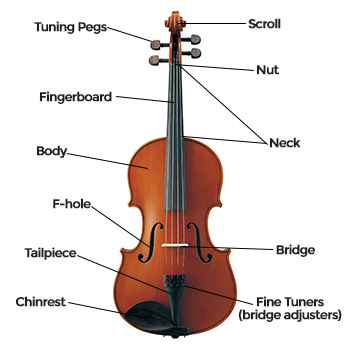
Viola Repair Pricing at Ward-Brodt Music
Alto Saxophone Keys And Fingering Chart - Plus Video Tutorial ALTO SAX FINGER POSITIONS FINGERING CHART There is the top key called the octave key - the thumb rest is right below it. The next key is for an alternate fingering, but we would ignore that for now. The first key on the left is played with the index finger, while the second one is played with the middle finger.

Alto Saxophone Keys Chart Instrument fingering charts - tahquitz high school band | Saxophones ...
Saxophone - Wikipedia The saxophone is a type of single-reed woodwind instrument with a conical body, usually made of brass. As with all single-reed instruments, sound is produced when a reed on a mouthpiece vibrates to produce a sound wave inside the instrument's body. The pitch is controlled by opening and closing holes in the body to change the effective length ...

Pin on Saxophone tutorijale
Saxophone Anatomy - Labelled diagram - Wordwall Saxophone Anatomy - Labelled diagram Mouthpiece, Neck cork, Ligature, Neck, Octave key, Octave pin, Neck screw, Keys, Body, Bell, Key guard, Bow. Saxophone Anatomy Share by Mrsv Music Like Edit Content Embed Log in required Theme Fonts Log in required Options Leaderboard Switch template Interactives

Printable Montessori Music Cards by Montessori Print Shop
Label the Saxophone Printout - EnchantedLearning.com reed. Antoine-Joseph (Adolphe) Sax (1814 - Feb. 4, 1894) was Belgian musical instrument manufacturer and musician (he played the clarinet) who invented the saxophone. Sax first exhibited his newly-invented woodwind instrument at the 1841 Brussels Exhibition, and patented it in 1846. Sax also invented the saxhorn (a family of bugles with 3 or 4 ...

Pin by Saxgourmet Products on Saxophone Patents | Saxophone, Inventor, Fig
Instrument Construction - Saxophonia The main parts of the saxophone are the mouthpiece, neck, neck cork, ligature, octave pin, octave key, neck screws, keys, bell, key guards, bow, reed, body, neck strap, thumb hook (right hand), thumb rest (left hand). A labeled diagram of an Alto Saxophone Tenor Sax Diagram How the Saxophone is Made
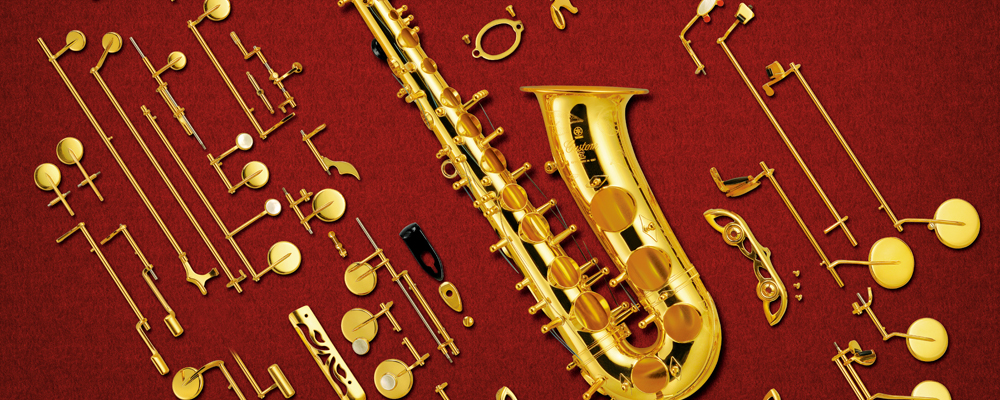
The Structure of the Saxophone:Learn the names of the parts - Musical Instrument Guide - Yamaha ...
Stencil Saxophone List - SchoolOfTheRock As explained in our article Evaluating Vintage Saxophones explains, "Stencils" are vintage saxophones saxophones that were made by "name brand" companies like Buescher, Martin, and Conn, but labeled for other companies. Usually they had fewer features, less engraving, etc., but at least they were solid compared to offbrand horns.

saxophone anatomy | Saxophone, Instrument families, Music theory
Fingering Scheme for Saxophone - The Woodwind Fingering Guide 1 · First Finger Key (B) 2 · Second Finger Key (A/C) 3 · Third Finger Key (G) f · Front F Key The Front F key is the topmost left hand key and is pressed by the first finger. It was designed to provide an altissimo fingering for F 6 as an alternate to using the palm keys. The key is used for various other altissimo fingerings as well.

Saxtastic Saxophone: CenterPitch 10 mini Tuner/Metronome Review
Saxophone Parts | Saxophone Players Guide The Ligature, Mouthpiece, Neck and Body of the Saxophone are the all important Saxophone parts that you need to fit together before you could manage to play a note. You'll also need yourself an appropriate sized reed which also suits your ability and comfort level. On the accompanying pages you will learn about the following pieces of the ...

Mr Bob Radio Blog | When your name is a palindrome they call you Mister.
Saxophone Major Scales: Full Range Note-by-note Fingering Charts Note #5 — A. Note #6 — B. Note #7 — C-sharp. With C-sharp, you are not holding any keys down on the saxophone. Note #8 — D. The fingering for this note is similar with the Low D but with the octave key. It is an octave above Low D. The E-flat Major Scale. The next scale is E-flat major scale.

Pin on Saxophone tutorijale
Parts of the Saxophone | The Instrument Place Saxophone keys are small metal cups filled with a thin layer of padding which expose or cover the tone holes. Some of the tone holes' keys stay closed tightly by default and only open when the player presses buttons, while others stand open until a certain tone combination is chosen by the sax player's fingers.
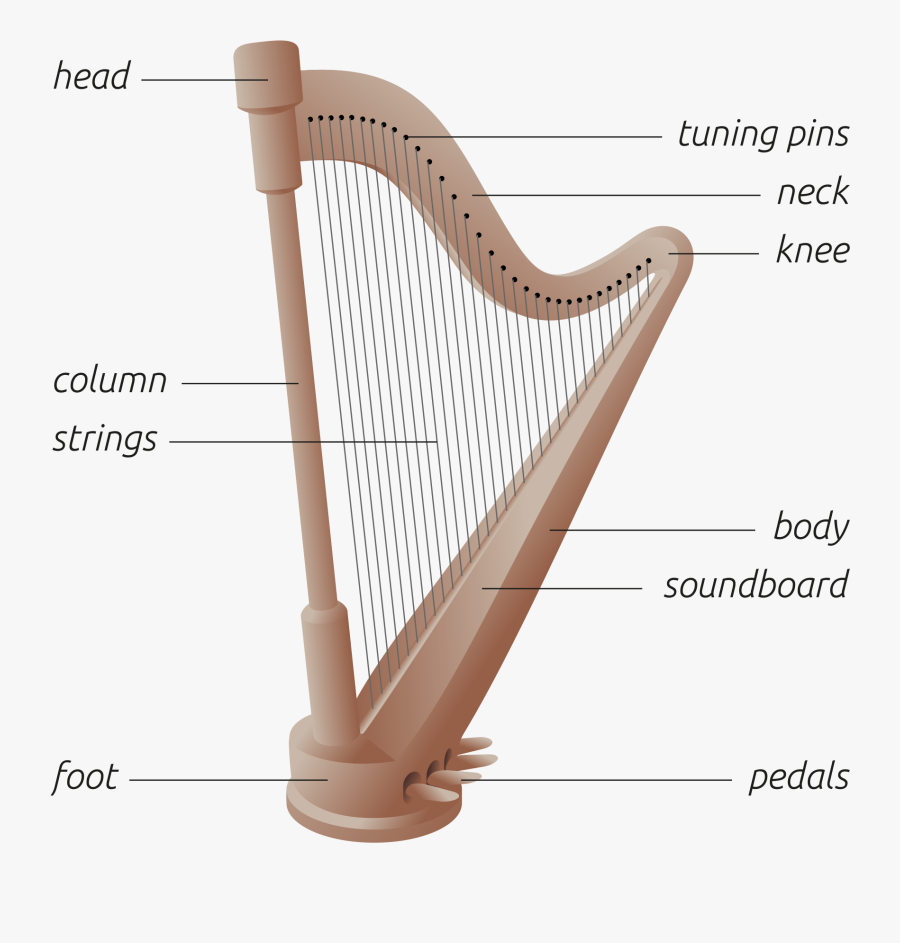
Px Svg Png - Diagram Of A Harp , Free Transparent Clipart - ClipartKey
Saxophone Parts - Full Diagram And A Great Video Review The mouthpiece is held in place by the neck of the saxophone. The neck joins the mouthpiece and the body of the sax. When the mouthpiece is blown, the air flows through the neck to get to the body of the sax where the sound is changed to produce different notes. The saxophone neck is believed to work the same way the human neck works. BODY:

saxophone Chart

Saxtastic Saxophone: CenterPitch 10 mini Tuner/Metronome Review

Printable saxophone fingering chart | Saxophone | Pinterest | Saxophone and Charts

Saxophone Alto Sax Or Tenor Sax For Beginners Tutor Book CD & DVD H8 | eBay

Patent US2033774 - Saxophone - Google Patents
Post a Comment for "42 saxophone diagram with labels"